
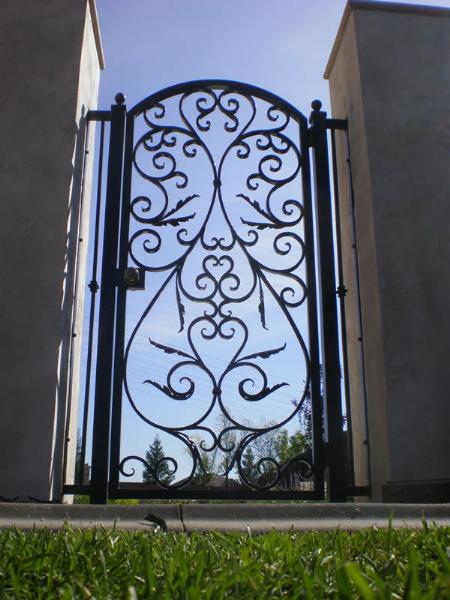
Homeowners and builders often hear both terms and assume they mean the same thing. They don’t. “Rod iron” usually refers to modern steel sold in rod form, while “wrought iron” is a historic, low-carbon, fiber-filled iron used before modern steel took over. Most metal gates and railings you see today aren’t made from true historic material; they’re mild steel marketed as “wrought.” Knowing this difference helps you choose the right metal for strength, looks, cost, and upkeep.
First, understand what each term actually means. Second, compare how they’re made and how they behave in weather and day-to-day use. Third, match the metal to your budget and the finish you want. With those basics in place, you can select the best option between rod iron or wrought iron that fits your project without surprise costs or performance gaps.
What is Rod Iron?
“Rod iron” in present-day use almost always means mild steel supplied as bars or rods. It’s a low-to-medium carbon steel that welds easily, bends cleanly, and is widely available in hardware and steel yards. It comes in many shapes, round, square, flat, angled, and takes paint, powder coat, or galvanizing. Because it’s common and consistent, most fabricators default to it for railings, gates, and grills.
What is Wrought Iron?
True wrought iron is an older material made by refining pig iron with repeated heating and hammering. It contains very little carbon and strands of slag that give it a fibrous look when etched or cut. It forges beautifully at the anvil, can be forge-welded, and has a characteristic, hand-worked texture. Today, it’s no longer produced on an industrial scale; supply comes from reclaimed stock or small specialty batches, which makes it rare and expensive.
Key Differences Between Rod Iron and Wrought Iron
Here are some of the major differences between rod iron and wrought iron to make the choice clear:
Material Composition
- Rod iron: Uniform steel structure, no slag fibers, and low-to-moderate carbon.
- Wrought iron: Very low carbon with slag stringers of 1-3% which produce a “grain.”
Manufacturing Method
- Rod iron: The contemporary steelmaking process (basic oxygen or electric arc) and then hot-rolled or drawn into wire.
- Wrought iron: The historic process of puddling and hammering that slurries up and refines the metal through hand or power hammers.
Strength and Toughness
- Rod iron: The premium tensile strength is usually higher than that of the historical wrought, good impact toughness, and consistent from batch to batch.
- Wrought iron: Lower tensile strength but outstanding toughness and fatigue resistance; it can be maintained under stress for a longer time.
Flexibility and Workability
- Rod iron: A metal that is very easy to weld using MIG or TIG techniques, metalworking is done by using simple tools, and thus it is the most common fabricating material due to these properties.
- Wrought iron: One of its main advantages is that hot forging offers an excellent application for decorative metalwork; besides, metalworking is done without making any additional expenses for cleaning, and thus, very intricate scrolls and collars can be made by the traditional method.
Corrosion Resistance
- Rod iron: Rusts if unprotected; benefits from primer, paint, powder coat, or galvanizing.
- Wrought iron: Naturally more resistant to deep pitting due to slag fibers that slow rust spread; still needs coating for long life outdoors.
Appearance and Texture
- Rod iron: Glossy, even surfaces; sharp, contemporary lines; decorative features are mostly welded or machined.
- Wrought iron: The “grain” can be seen on fractured or etched surfaces; hand-worked details seem to be organic and traditional.
Common Uses
- Rod iron: Modern railings, security grills, garden gates, balcony guards, furniture frames, and the majority of metalworks for daily use.
- Wrought iron: Restoration and conservation of heritage projects requiring high-end ornamental pieces where historic authenticity is very important.
Historical Availability
- Rod iron: Readily available worldwide in standard sizes; short lead times.
- Wrought iron: Scarce; often sourced from reclaimed anchors, tie bars, or old bridge stock; longer lead times and limited lengths.
Cost Difference
- Rod iron: Lower material price, predictable labor, broad competition among suppliers; the budget choice for most builds.
- Wrought iron: Premium material cost and specialist labor; transport and sourcing add to the total price.
Maintenance Needs
- Rod iron: Properly prepare surfaces, apply a primer, and then paint; if you are in a coastal or high-salt area, think of hot-dip galvanizing plus topcoat.
- Wrought iron: It is always advisable to apply a good quality coating; the slow rusting can be beneficial in the case of old buildings. Still, regular inspection and painting cycles remain important.
Which is Better?
Choose based on project goals:
- Pick rod iron when:
- You need reliable strength at a reasonable cost.
- The design is modern or uses standard profiles and welds.
- Fast turnaround and easy sourcing are important.
- You plan to protect with galvanizing and durable paint for long outdoor life.
- Pick wrought iron when:
- The project is a historical repair or must match period details.
- You want hand-forged artistry, collars, and scrolls made with traditional joinery.
- You accept a higher cost and longer lead time for a unique craft value.
- Local codes or conservation rules specify like-for-like material.
Conclusion
When both materials are designed and coated properly, they can provide safe, durable, and attractive railings, gates, and other decorative work. For regular construction projects, a mild steel rod is the easy, reliable option that offers good value, strength, and supply. In restoration or high-art pieces, true wrought iron justifies its place with its unique surface and heritage of manual forging techniques. Define your priorities, authenticity, budget, timeline, and upkeep, then match the metal between rod iron or wrought iron to those needs to avoid contingencies and get the result you want.